A playbook for narrating with dignity.
Communicating Palestine is the Palestinian Information & Policy Institute’s practical guide to ethical storytelling. We designed and built it end to end, in English and Portuguese.
Communicating Palestine is the Palestinian Information & Policy Institute’s practical guide to ethical storytelling. We designed and built it end to end, in English and Portuguese.
PIPD had detailed, sensitive material to publish: narrative analysis, terminology guidance, visual ethics. Guidance like this usually ships as a report that gets read once.
This had to work as a reference that journalists, advocates, academics and policymakers return to mid-deadline, in more than one language, with a visual identity strong enough to be cited on its own. The harder constraint was tone. Guidance about how to talk about Palestine is read skeptically by design, so the site had to look considered rather than campaigning, and had to make its sources easy to check.
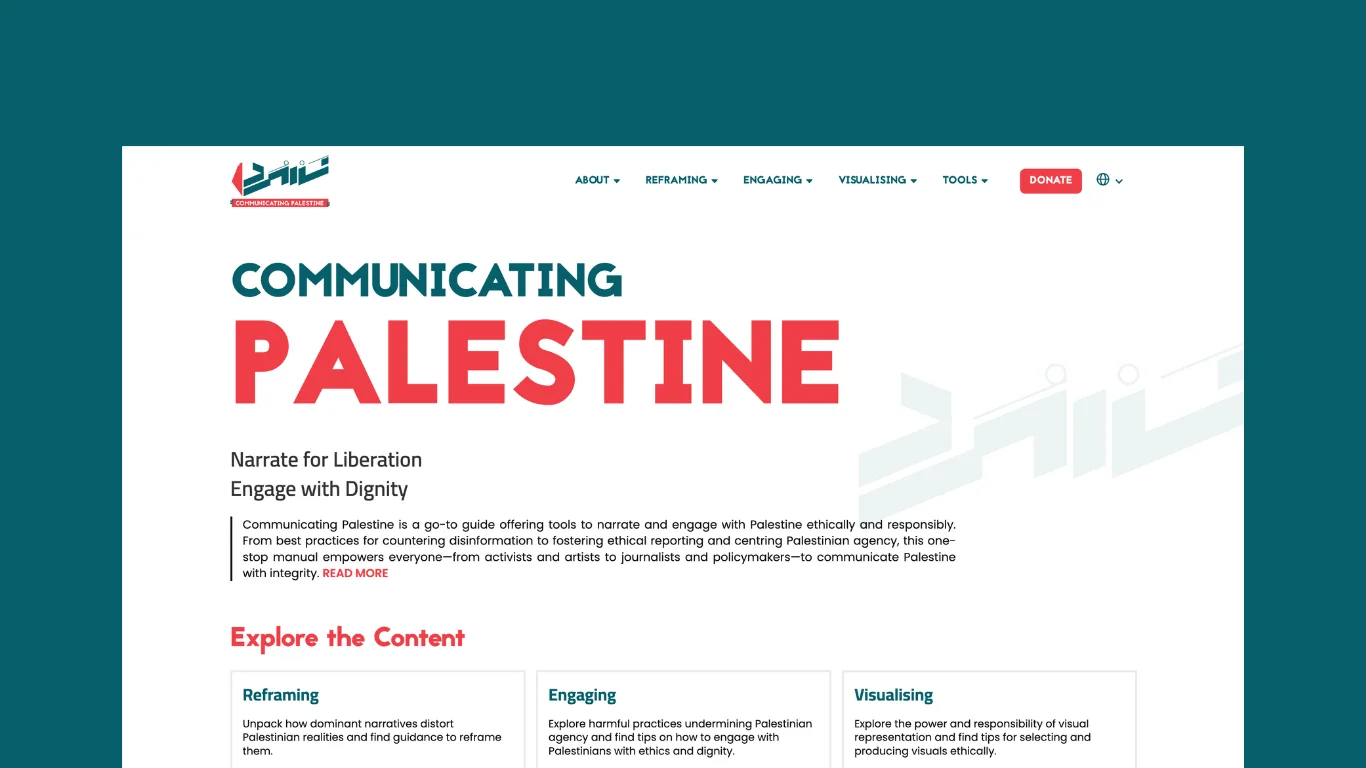
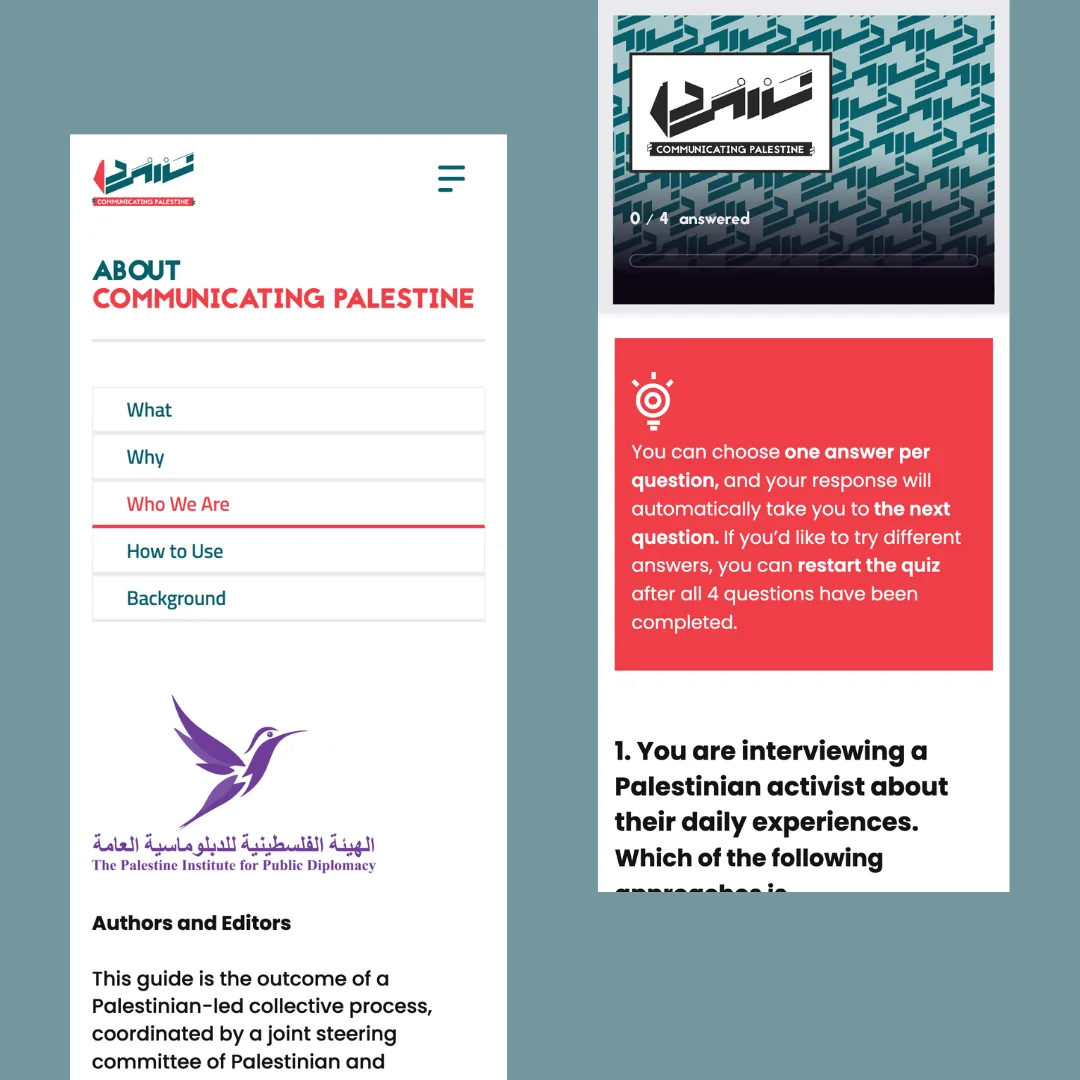
We organized the guide into four areas, Reframing, Engaging, Visualising and Tools, and built a separate path through them for each of the six audiences, because a newsroom editor and a policy adviser do not need the same chapters in the same order.
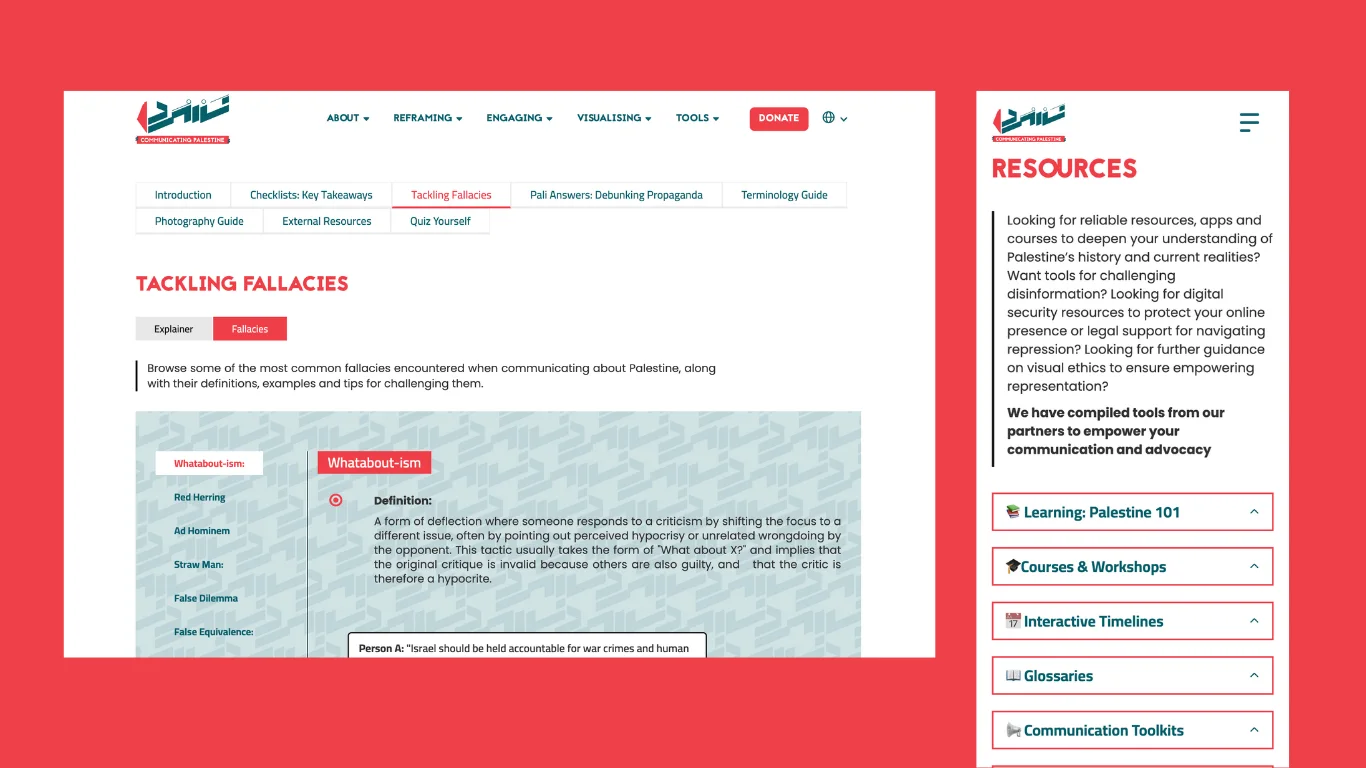
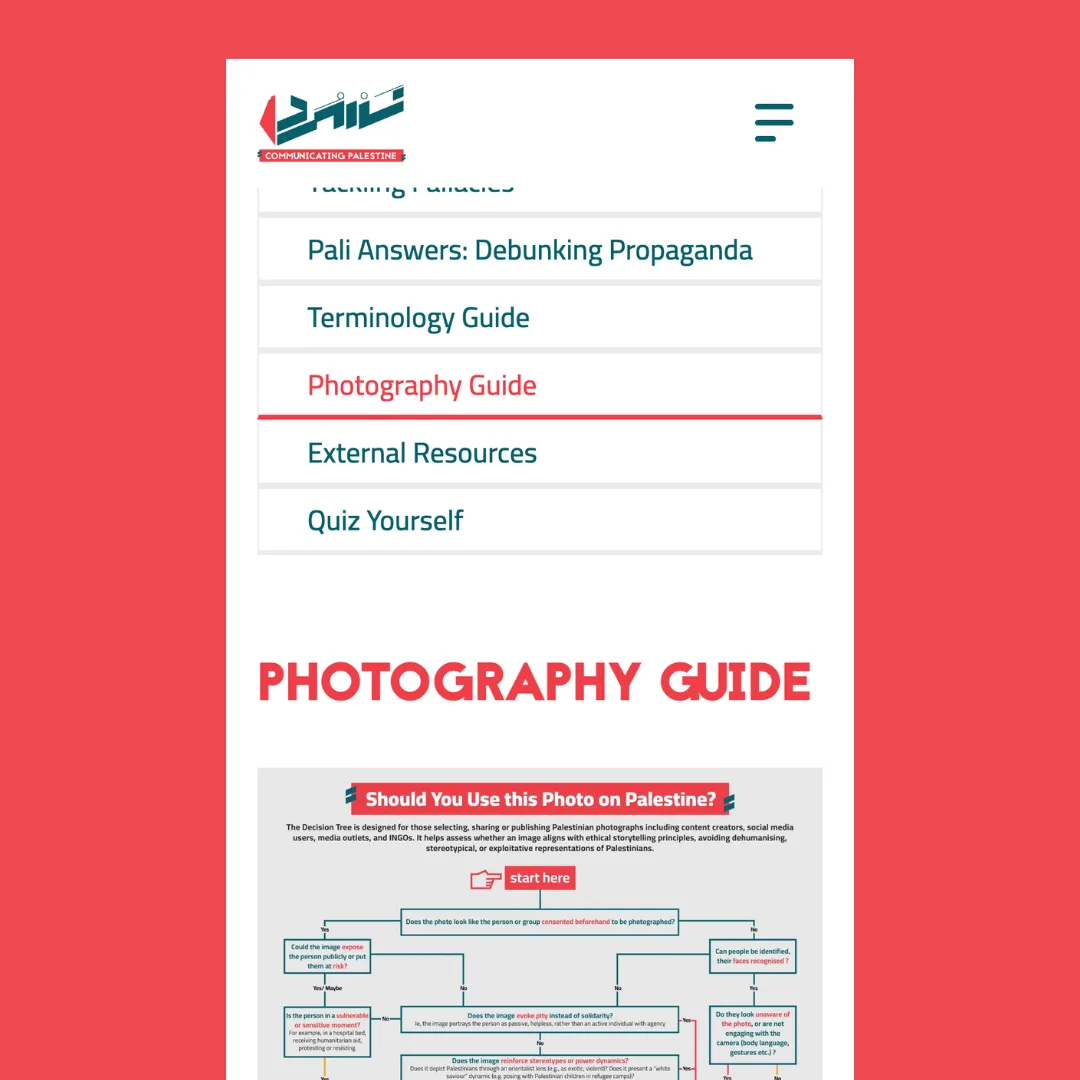
The guidance became pages rather than downloads. Checklists, a terminology guide, a photography guide and self-quizzes all live in the site, so they can be used in the field instead of filed away after one read. The whole guide ships in English and Portuguese, and the newsletter and contact paths feed PIPD’s wider work rather than dead-ending at the last chapter.